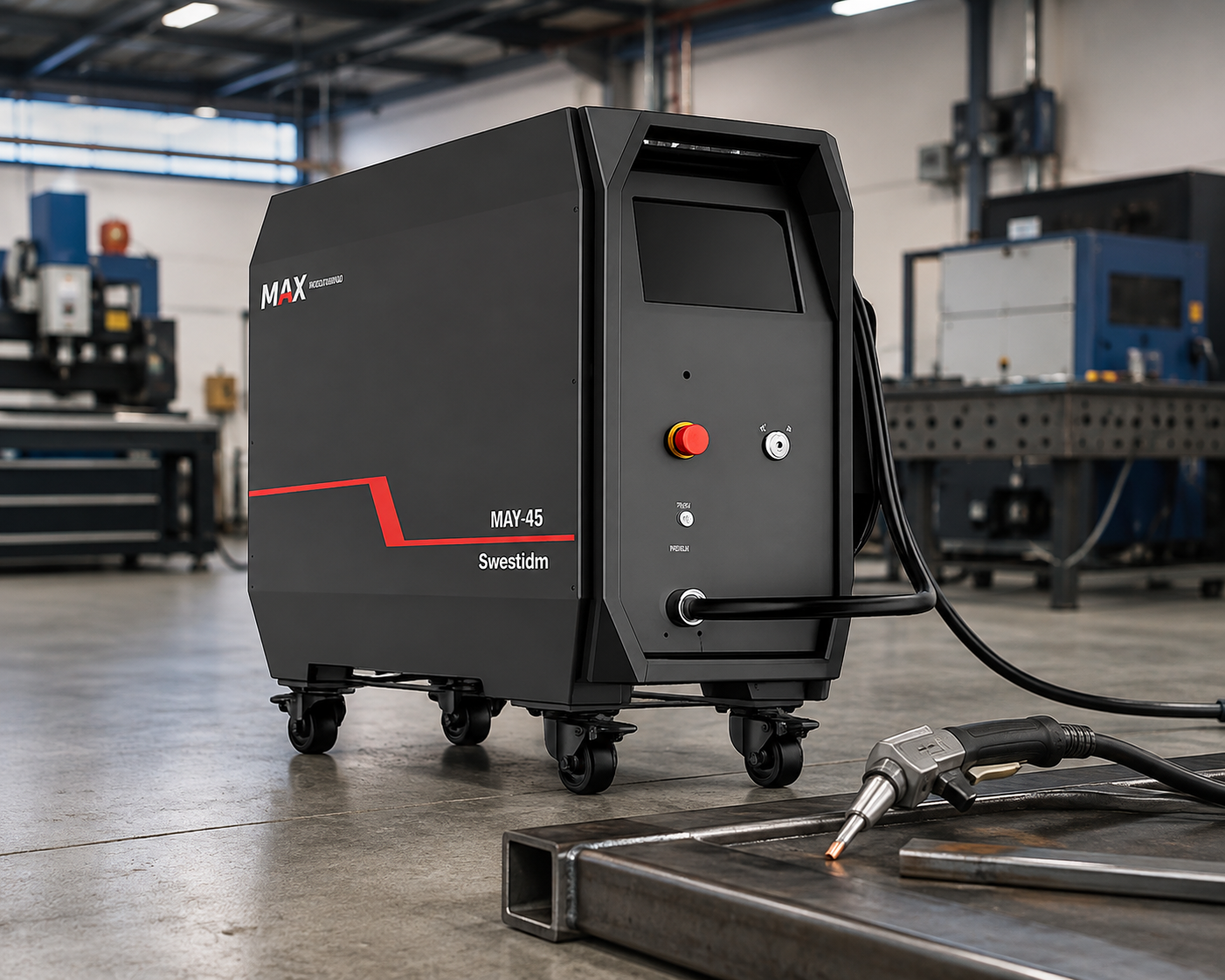
Shops that weld metal for a living eventually face this question: stick with TIG, or move to a laser system? Both processes can produce a strong, clean weld, but they get there in very different ways. Choosing between laser welding vs TIG welding comes down to your material, your production volume, and how much time you can spend on setup and cleanup.
| Factor | TIG Welding | Laser Welding |
| Heat input | High, prone to warping thin metal | Minimal, reduces distortion |
| Speed | Slower, single-pass manual process | Up to 4x faster than TIG or MIG |
| Learning curve | Takes years to master a steady puddle | Easier to learn, can be automated |
| Post-weld cleanup | Often needs grinding or finishing | Often needs no post-cleaning |
| Material range | Wide range, but slow on dissimilar joins | Steel, aluminum, titanium, and dissimilar metals with minimal distortion |
What Is the Difference Between Laser Welding and TIG Welding?
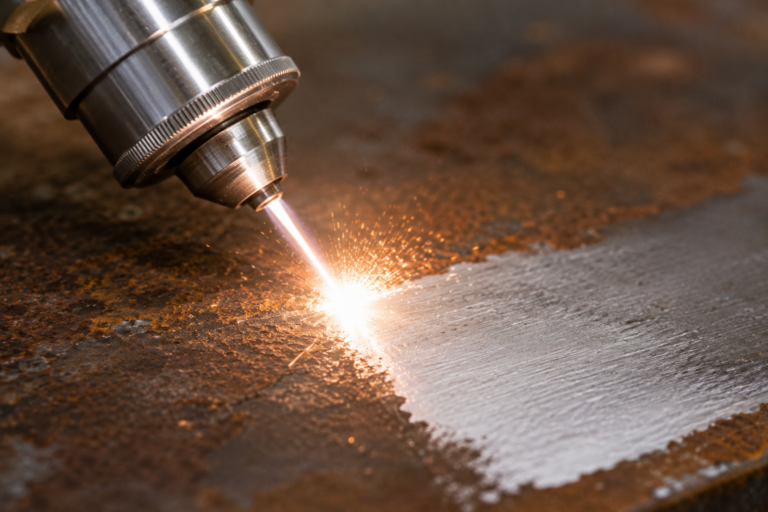
TIG welding uses a handheld torch, a tungsten electrode, and a filler rod to build a weld pool one careful pass at a time. Laser welding uses a focused beam of light to melt the joint directly, which delivers far less heat into the surrounding metal. That lower heat input is the reason laser welds tend to warp less and finish cleaner, even on thin or detailed parts.
Both processes work on stainless steel, carbon steel, and aluminum. Laser systems from XCEL Laser also handle titanium and dissimilar metal combinations that are harder to join by hand, with minimal distortion or deformation to the base material.
Is Laser Welding Faster Than TIG Welding?
Yes. In the laser welding vs TIG welding comparison, speed is usually the first difference a shop notices. Laser welding runs up to four times faster than traditional MIG or TIG methods, since the beam moves through the joint in a single, continuous pass instead of the slower manual buildup TIG requires.
That speed adds up fast on repetitive jobs. A few reasons laser welding pulls ahead on the floor:
- Single-pass welds instead of multiple slow passes
- Less time spent on setup between parts
- Consistent results that don’t depend on operator fatigue
- Easier to bring new operators up to speed
Which Process Gives a Cleaner, More Precise Weld?
Laser welding generally produces the cleaner result. Because the heat-affected zone is so small, welds come out tighter and more consistent, and often need no grinding or post-weld finishing at all. TIG welding can also produce a beautiful, precise bead, but it takes a skilled operator and more finishing work to get there consistently.
This is where the laser welding vs TIG welding question really comes down to your finishing budget. If your shop spends real labor hours cleaning up welds after the fact, a laser system can cut that step out almost entirely.
Is TIG Welding Still the Better Choice for Certain Jobs?
Sometimes, yes. TIG welding remains a solid, well-understood process for shops with lower volume, simple joints, or teams already trained on it. It does not require the upfront investment of a laser system, and for a one-off repair or a job that does not repeat often, a torch and filler rod can still get the job done well.
Where laser welding pulls ahead is at higher volume, on thin or detailed material, or anywhere reducing distortion and rework matters more than the cost of switching equipment.
How Much Training Does Each Method Require?
TIG welding takes years of hands-on practice to master. Holding a steady arc, feeding filler metal, and controlling heat by feel is a real skill, and it shows in the pay difference between a beginner and an experienced TIG welder. Laser welding has a much shorter learning curve, since the machine controls much of the heat and travel speed for the operator.
A shorter learning curve means real advantages for growing teams:
- New hires can get productive in days, not years
- Less dependence on one or two highly skilled welders
- Processes can be automated as production scales up
Which Welding Method Should Your Shop Choose?
There is no single right answer to the question of laser welding vs TIG welding. A shop doing detailed, low-volume repair work may still be better served by TIG. A shop looking to cut cycle time, reduce warping, and simplify training is a strong fit for laser welding.
XCEL Laser builds handheld and industrial laser welding machines that are 100 percent assembled in the United States at its Aurora, Illinois, facility. The company grew out of decades of hands-on experience in metal manufacturing, so its systems are built around the real problems welders run into on the floor, not just lab conditions.
Frequently Asked Questions
Is laser welding stronger than TIG welding?
Laser welding often produces a weld that is just as strong as TIG, and sometimes stronger on thin material, because the lower heat input causes less distortion around the joint. The right choice still depends on the metal, thickness, and application.
Can laser welding replace TIG welding entirely?
Not always. Laser welding is a strong fit for high-volume production and thin or detailed parts, but some shops keep TIG on hand for one-off repairs, tight corners, or jobs where existing equipment already works well.
What metals can XCEL Laser welding machines handle?
XCEL Laser’s welding systems handle carbon steel, stainless steel, aluminum, nickel alloys, titanium, copper, and dissimilar metal combinations. This range covers most of what a general fabrication or manufacturing shop needs to join.
Is laser welding harder to learn than TIG welding?
No, it is generally easier. TIG welding takes years to master by hand, while laser welding has a shorter learning curve since the machine handles much of the heat control. This makes it easier to train new operators or scale up a team.
Want to see whether laser welding makes sense for your shop? XCEL Laser is based at 1065 Sill Ave, Aurora, IL 60506. Call the team at 630-425-4253, or reach out through the contact page to talk with a specialist about the right system for your production floor.