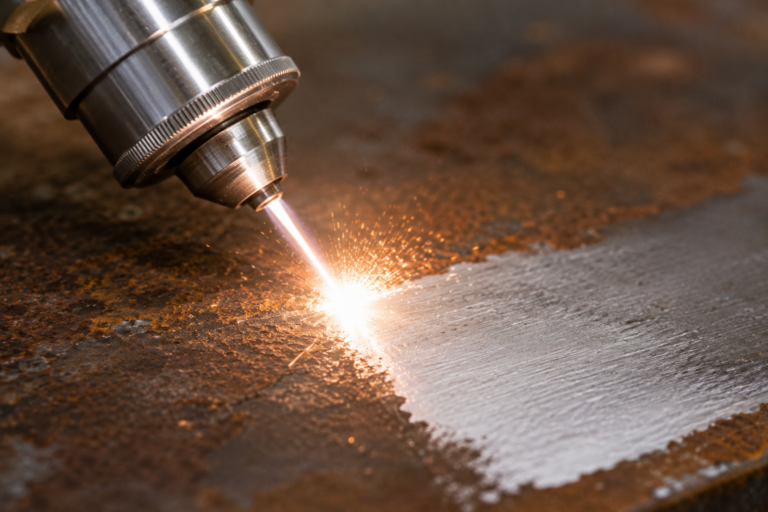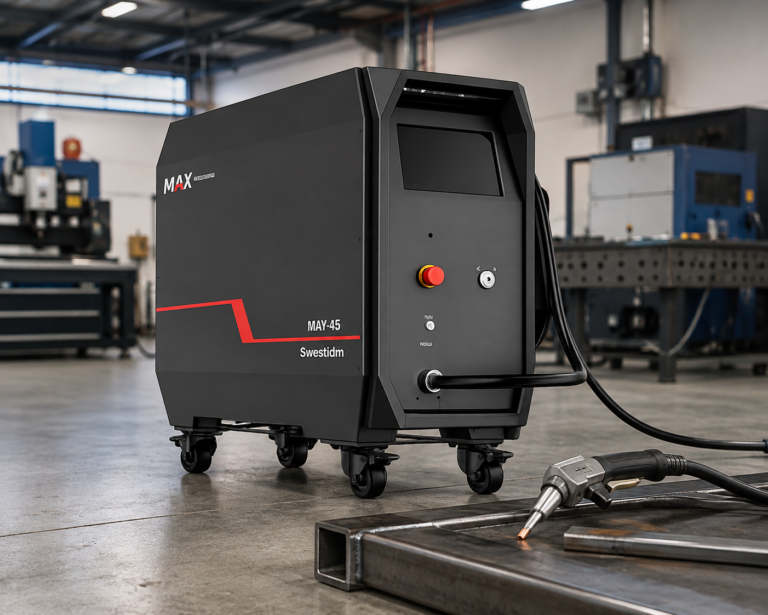
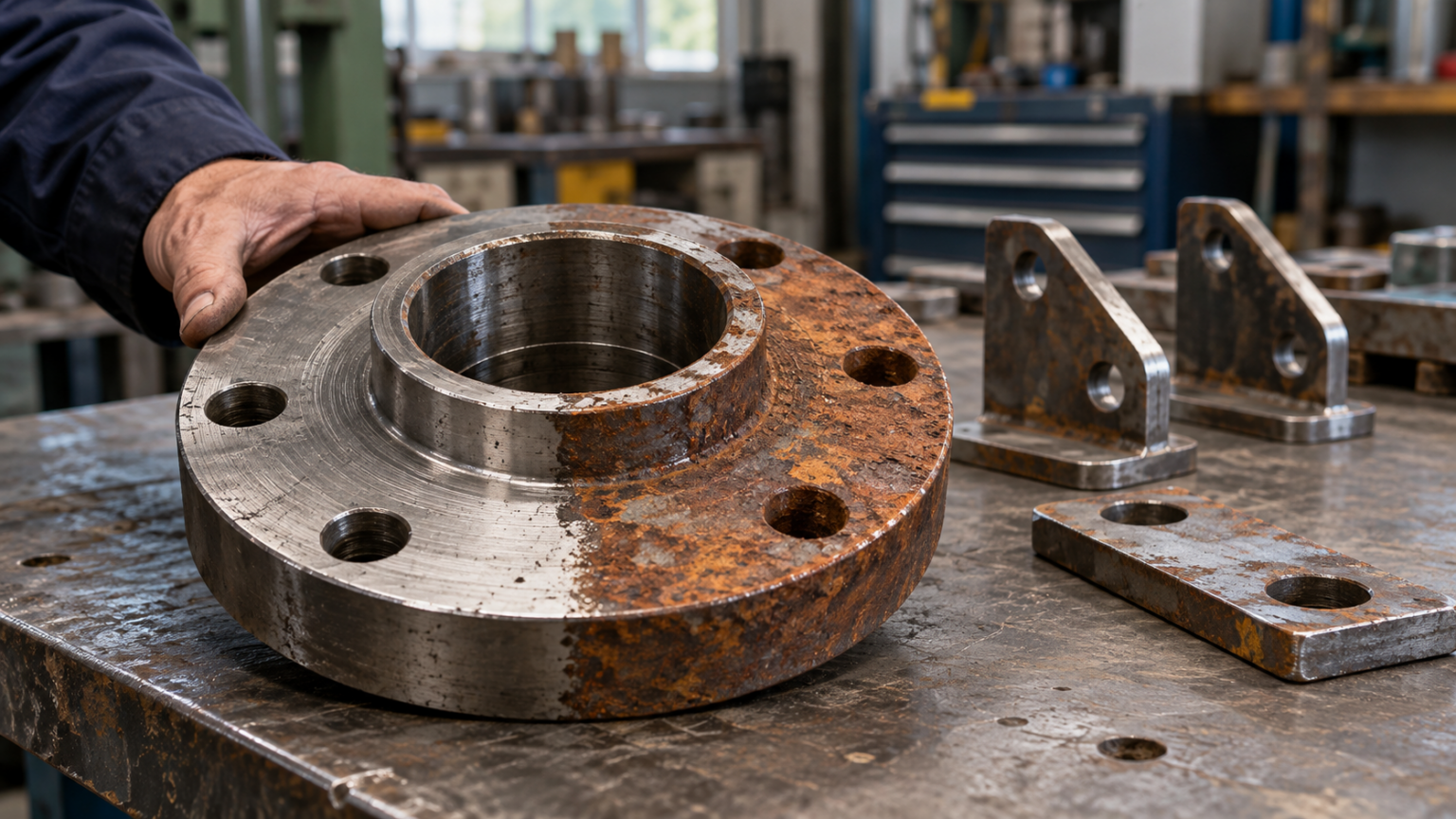
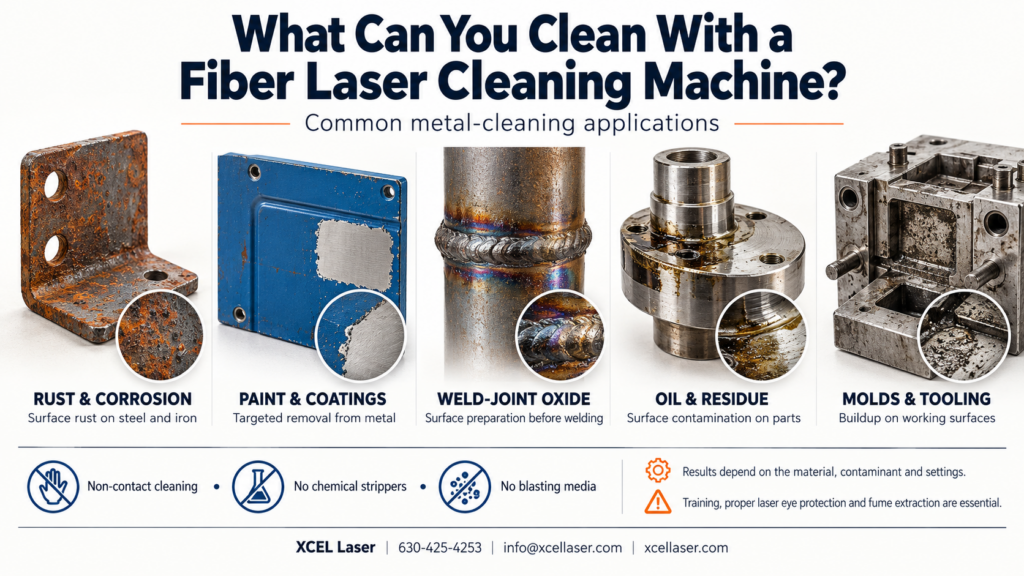
A fiber laser cleaning machine removes rust, paint, oxide, oil, and other buildup from metal surfaces without touching the part, using chemicals, or leaving a pile of blasting media behind. At XCEL Laser, we use the laser equipment we supply every day, so we hear this question a lot: what can it actually clean? This guide covers the jobs laser cleaning does well, a few places to be careful, and how to decide if it belongs in your shop.
| Common problem | What laser cleaning does |
| Rust on steel and iron parts | Lifts the rust and leaves bare metal underneath |
| Old paint or coatings | Vaporizes the finish without sanding or chemical strippers |
| Oxide near a weld joint | Clears the joint so it is ready for welding |
| Oil, grease, and residue | Removes surface contamination without solvents |
| Buildup on molds and tooling | Cleans residue with no abrasive media to sweep up |
How does laser cleaning actually work?
Laser cleaning uses short pulses of focused light to break up and vaporize whatever is sitting on a surface. The contamination absorbs the energy and lifts away, while the metal underneath is left clean. Because nothing physically scrubs the part, it is a non-contact, environmentally friendly way to prepare a surface.
A few things set it apart from older methods:
- No chemical strippers or solvents to buy, store, or dispose of
- No blasting media to sweep up afterward
- Targeted cleaning, so you can treat one spot without touching the rest of the part
- A handheld approach that reaches awkward areas
Can a laser remove rust and corrosion?
Yes. Rust removal is the most common reason people look at laser cleaning, and it is where the process earns its reputation. Surface rust and light corrosion on steel and iron can be lifted off, leaving bare metal ready for the next step.
Rust removal comes up most often with:
- Fabricated parts that picked up surface rust in storage
- Tools, fixtures, and frames in a working shop
- Metal being restored rather than replaced
- Parts that need to be bare before coating or welding
Heavily pitted metal is a different story. A laser can clean rust out of the pits, but it cannot rebuild metal that has already been lost. If you are not sure how bad a part is, talk it over with our team before you decide.
Does laser cleaning work on paint and coatings?
Yes, laser cleaning can remove paint and other coatings from metal. The coating absorbs the laser energy and vaporizes, so you strip the finish without sanding, scraping, or caustic strippers.
This is useful when you want control. Instead of stripping a whole part, you can clear only the area that needs attention, such as a joint or a spot about to be recoated. A fiber laser cleaning machine gives the operator that kind of control, which is hard to match with blasting or chemical stripping.
Can you use laser cleaning before welding?
Yes, and it is one of the best uses for it. Welds depend on clean metal. Oxide, rust, paint, and oil near the joint can all cause problems, so clearing them first gives the weld a better starting point.
XCEL Laser supplies laser welding, cutting, and cleaning equipment for metal manufacturing, and we run the machines ourselves, so we see how surface prep affects everything that follows. A shop that welds with a laser can add a fiber laser cleaning machine to prep joints before they reach the welder.
What else can a laser cleaner handle?
Beyond rust, paint, and oxide, laser cleaning takes on a range of everyday shop problems:
- Oil, grease, and other residue left on metal parts
- Buildup on molds and tooling
- Surface prep before bonding, coating, or finishing
- Restoration work on older metal pieces
What should you be careful about with laser cleaning?
Laser cleaning works best on metal, and results depend on the material and the contaminant. Some plastics and delicate finishes can react badly to laser energy, so test a small area first or ask before you commit.
Safety matters, too. A laser is a serious tool, and operators need proper eye protection and training. That is part of why we offer service and training along with equipment.
How do you know if laser cleaning fits your shop?
Start with your most frequent cleaning problem. If your team spends hours on rust, paint, or oxide, laser cleaning is worth a close look. Ask yourself:
- What are you removing: rust, paint, oxide, oil, or something else?
- What material is underneath?
- How often does the job come up?
Once you have those answers, comparing a fiber laser cleaning machine against blasting, sanding, or chemical stripping gets a lot easier. Pricing depends on what you need, so our sales team can walk you through your options and a custom quote.
Frequently Asked Questions
Will laser cleaning damage the metal underneath?
Not when the process is set up correctly. The contamination absorbs the energy and vaporizes, while the base metal stays in place. Training matters.
Is laser cleaning environmentally friendly?
It is a cleaner option than many traditional methods. There are no chemical strippers and no blasting media to dispose of. Contaminants leave as vapor and fine particles, so good ventilation or fume extraction is still part of safe use.
Can one laser cleaner handle different jobs?
Often, yes. The same equipment can remove rust, paint, oxide, and residue, with settings adjusted for each job. The right setup depends on your materials, so talk to our team.
How much does a laser cleaning machine cost?
Pricing depends on what you need to clean and how you plan to use the equipment. Contact our sales team for a custom quote based on your application.
Ready to talk about what laser cleaning could do for your shop? Call XCEL Laser at 630-425-4253 or email info@xcellaser.com. You can also find us at 1065 Sill Ave, Aurora, IL 60506.