
Metal fabrication often hits a bottleneck during the cleaning phase. Whether you face thick mill scale, stubborn rust, or leftover oils, the preparation of the substrate determines the quality of the final weld or coating. Conventional methods like sandblasting or chemical baths come with heavy overhead and environmental footprints. Using a laser cleaning machine provides a non-contact solution that strips contaminants without compromising the structural integrity of the base material. This technology uses high-frequency pulses of light to vaporize surface layers, leaving the metal pristine and ready for the next stage of production.
Why Manufacturers Are Switching to Laser Technology
Fiber laser ablation systems utilize a focused beam to remove unwanted material through a process called sublimation. The energy from the laser cleaning machine is absorbed by the contaminant but reflected by the substrate. This ensures that the metal remains cool and undamaged while the rust or paint turns into gas.
| Category | Laser Cleaning | Traditional Sandblasting | Chemical Stripping |
| Operating Cost | 2.00 to 5.00 dollars per hour | 25.00 to 60.00 dollars per hour | Variable high disposal fees |
| Material Impact | Zero non-abrasive | High-surface profiling | High corrosion risk |
| Setup Time | Under 5 minutes | 30 to 60 minutes | 1 to 2 hours |
| Waste Output | Microscopic dust filtered | Large volume of spent media | Toxic liquid sludge |
Selecting the Right Laser Cleaning Machine for Your Shop
If the goal is high volume production, then a continuous-wave laser is the standard choice. If the project requires delicate mold cleaning or aerospace-grade precision, then a pulsed-laser system is necessary to prevent heat soak.
Most industrial shops must choose between a 1000W and a 3000W unit:
- A 1000W system effectively handles light rust and oils on thin-gauge materials.
- Moving to a 3000W laser cleaning machine allows the removal of thick bitumen coatings or heavy oxidation at speeds up to 15 square meters per hour.
The initial investment ranges from 15,000 to over 50,000 dollars, yet the lack of consumables like grit or acid means the machine often pays for itself within 12 to 18 months of active use.
Precision Surface Preparation Without Abrasives
Traditional grinding creates dust that infiltrates every corner of a facility. It also thins the metal. Laser cleaning removes this risk entirely. The beam can be adjusted to specific widths, allowing operators to clean a narrow strip for a weld joint without affecting the surrounding paint. This level of control is impossible with manual wire brushing or blasting.
Because the process is dry, there is no need to wait for parts to dry before moving to the paint booth. If the surface is oily, the laser vaporizes the hydrocarbons instantly. If the surface has mill scale, the high-energy pulses shatter the brittle layer. The resulting surface often has a higher energy state, which actually improves the adhesion of powder coatings and specialized primers. This efficiency is why many shops now integrate a laser cleaning machine directly into their automated CNC workflows to ensure every part meets strict quality tolerances before assembly.
Safety and Environmental Advantages
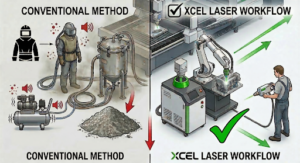
Safety protocols for laser use are straightforward but vital. Operators must wear wavelength-specific safety glasses to prevent eye damage from reflections. Unlike sandblasting, there is no need for heavy respirators or full body suits if the workstation has proper fume extraction. The extraction units capture the vaporized particles, which are usually collected in a small HEPA filter for easy disposal.
- Eliminate hazardous chemical storage and the associated insurance premiums.
- Reduce noise pollution in the shop compared to pneumatic grinders and compressors.
- Stop the cycle of buying, storing, and disposing of tons of blasting media.
If the work environment requires strict OSHA compliance regarding silica dust, then switching to a laser cleaning machine is the most effective path forward. It turns a messy, dangerous job into a clean, push-button operation. The reduction in physical labor also means fewer repetitive motion injuries for your staff.
Frequently Asked Questions
Does laser cleaning damage the underlying metal? The laser wavelength is tuned specifically to organic contaminants and oxides. If the beam hits clean steel or aluminum, the surface reflects the energy. This prevents the thinning, gouging, or warping common with aggressive grinding or heat-based stripping.
How much area can I clean in an hour? A 2000W pulsed laser cleaning machine can strip rust from 8 to 12 square meters of carbon steel per hour. If the coating is a thin powder coat, speeds may increase. If the coating is a thick, industrial-strength epoxy, production speeds may drop to 2 square meters per hour.
Don’t laser cleaners create dangerous fumes? Every industrial system requires a high-quality fume extractor. If the extractor utilizes a dual carbon and HEPA filter, it captures 99.97 percent of particles. This keeps the shop air clean and prevents the spread of toxic metal dust or vaporized paint throughout the facility.
Optimize Your Production Line Today
At Xcel Laser, we focus on providing the most efficient fabrication solutions for modern machine shops. We understand that time is the most expensive component of any project. Our team helps you navigate the technical specs to find the hardware that fits your specific material needs. Stop wasting hours on manual scrubbing and caustic chemicals.
Ready to upgrade your surface prep?
Give us a call at (713) 937-1111 or visit our Contact Us page to request a quote. We will help you find the right equipment to keep your production line moving at full speed.